Is There a Greek Goddess of Cats? Artemis, Bastet and Ephesus
In brief
Is there a Greek goddess of cats?
No. The ancient Greeks had no goddess of cats. The closest is Artemis: Herodotus wrote in the fifth century BC that the Egyptian cat goddess Bastet, worshipped at Bubastis, is Artemis in Greek, and in one myth Artemis hides from the monster Typhon as a cat.
The Greeks never gave cats a goddess of their own, but they came close, and the closest one lived in our city. Your editor opens Herodotus and Ovid and reports back.
No, there is no Greek goddess of cats. The ancient Greeks never gave cats a deity of their own, but they came close, and the goddess they came closest with is Artemis. Greek writers matched her with Bastet, the cat goddess of Egypt, and one old myth even turns Artemis into a cat.
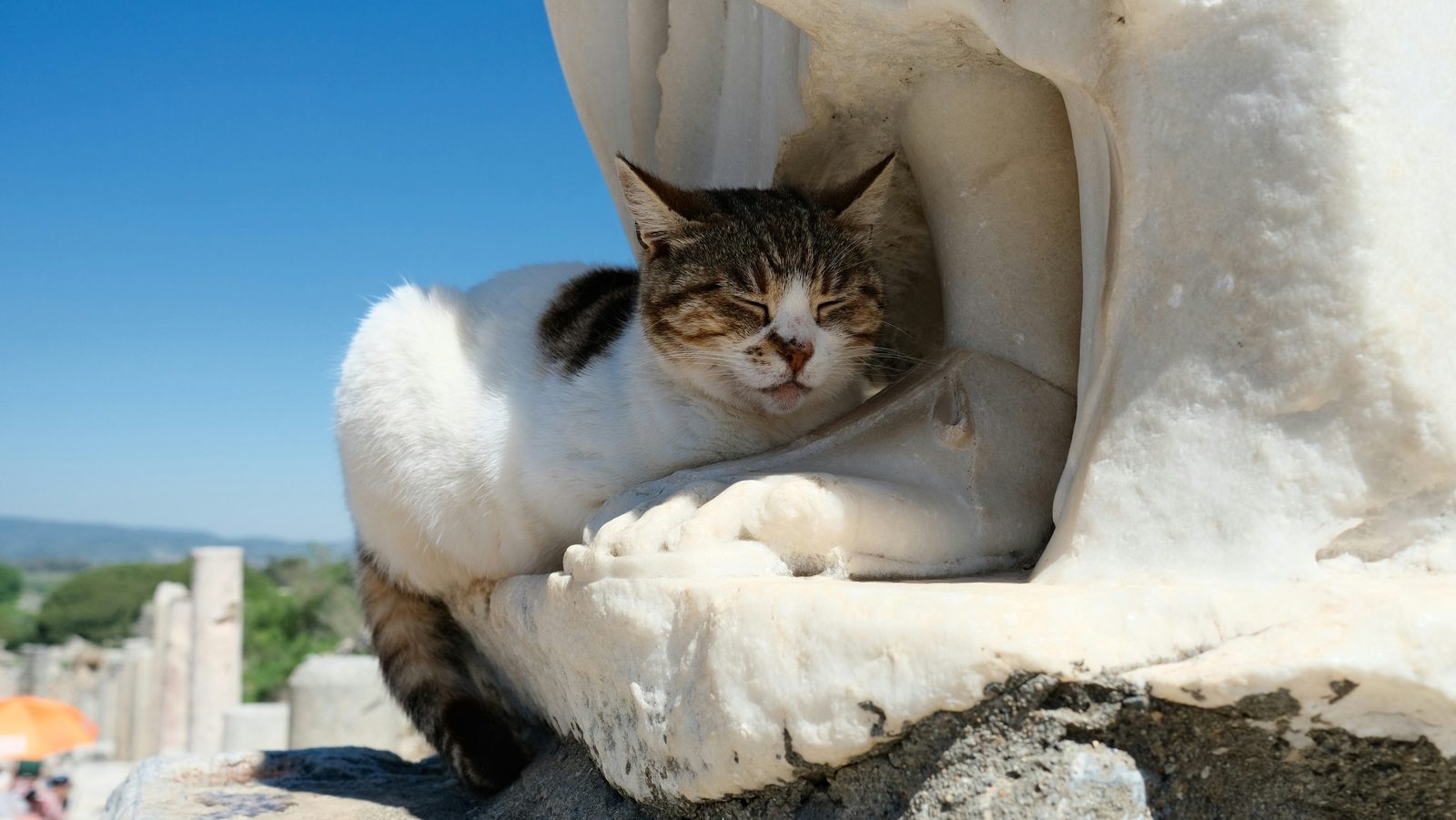
I explain Artemis to my guests at Ephesus every week, because Ephesus was her city. I asked the residents of the Mews for a comment. They said the answer was "any of us" and went back to sleep on the marble. So here is the longer version, with the ancient texts on the desk instead of my memory.
Was any Greek goddess linked with cats?
Only one, and only at second hand. Greek religion had no deity whose main job was cats. The nearest is Artemis, goddess of the hunt and of wild animals. Herodotus wrote that the Egyptian cat goddess Bastet, worshipped at Bubastis, was Artemis in the Greek language, and later poets turned Artemis into a cat.
Why do Greek writers link Artemis with Bastet?
Because Herodotus said so, twice. He was a Greek historian born in Halicarnassus, today's Bodrum, just down the coast from us, and in the fifth century BC he wrote a long book about Egypt. Whenever he met an Egyptian god, he gave it a Greek name. For the goddess of the city of Bubastis in the Nile Delta, the Greek name was Artemis.
Now Bubastis in the Hellenic tongue is Artemis.
He repeats it in 2.156: in the Egyptian tongue, "Artemis is Bubastis." The Egyptians called her Bastet. She began as a lioness goddess and over the centuries was shown more and more as a cat, or as a woman with a cat's head. Herodotus simply used the name of her city for her, which is why you will see both names. The ancient Greek word for a cat was ailouros, and some modern books give that as her Greek name too.
Herodotus also describes her festival, and it is quite a party. Men and women sailed to Bubastis together, with music, clapping and singing at every town on the river. The locals told him that up to seven hundred thousand men and women came each year, not counting children, and that more wine was drunk at that festival than in the whole rest of the year (2.60).
He also shows how seriously Egyptians took their cats: when a house cat died, the family shaved their eyebrows (2.66), and dead cats were embalmed and buried at Bubastis (2.67). That is the real cat goddess. The Greeks admired her from a distance and gave her their own name.
Did Artemis ever turn into a cat?
Yes, in one story, and it is a strange one. The giant monster Typhon rises against the gods, and they run away to Egypt and hide in animal shapes. The Roman poet Ovid tells it in Book 5 of his Metamorphoses, written in Latin in the early first century AD. Jupiter becomes a ram, Apollo a raven, Bacchus a goat, Juno a white cow, Venus a fish, Mercury an ibis, and "the sister of Phoebus," Diana, hides as a cat. In the Latin it is three short words: fele soror Phoebi.
A detail I like: in Ovid the story is sung by the daughters of Pierus in a singing contest with the Muses, and they lose.
A Greek version survives in Antoninus Liberalis, Metamorphoses 28, retelling the poet Nicander: Apollo becomes a hawk, Hermes an ibis, Ares a fish, Dionysus a goat, Heracles a fawn, Hephaestus an ox, Leto a mouse, and Artemis again the cat. To me it reads like a Greek way of explaining why Egypt's gods look like animals. It is the only time a Greek goddess wears whiskers.
What do Artemis and cats have to do with Ephesus?
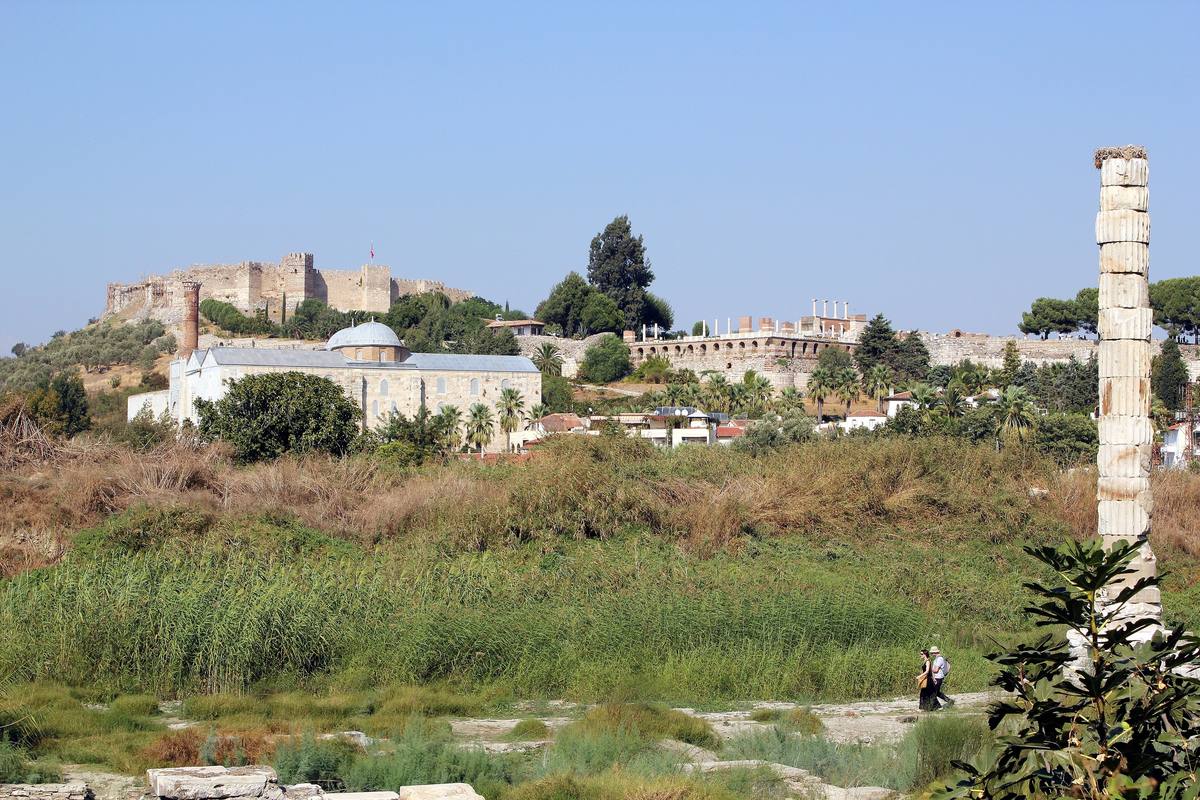
Ephesus was the city of Artemis. Her temple, the Artemision, was one of the Seven Wonders of the Ancient World, and in the Book of Acts the crowd in the theater shouts "Great is Artemis of the Ephesians" for about two hours (Acts 19, verse 34). So the cats of Ephesus live, quite literally, in the goddess's hometown.
Now the honest part, because this is a newspaper. Nothing I know of says cats were sacred at Ephesus. On our front page I joke that in the city of Artemis cats were practically family. That is the Mews talking, not an excavation report. The Artemis of Ephesus was a mistress of wild animals, and her cult here was about much more than pets.
There is one small thread back to Bastet, though. In the early 1900s the British archaeologist D. G. Hogarth dug the oldest offerings under the temple, from roughly 650 to 600 BC. Among them was a little bone plaque from a box, showing a goddess with the symbols of the Egyptian goddesses Bastet and Hathor. Scholars read finds like this as Egyptian art reaching Ionia, not as a cat cult in Ephesus. Still, it means Bastet's image was here, at the temple of Artemis, more than two and a half thousand years ago.
The cats came later and stayed. Around 150 to 200 of them live in Ephesus today, depending on the season. If you wonder why there are so many, I wrote about that in why there are so many cats in Turkey.
Where can you see Artemis in Ephesus today?
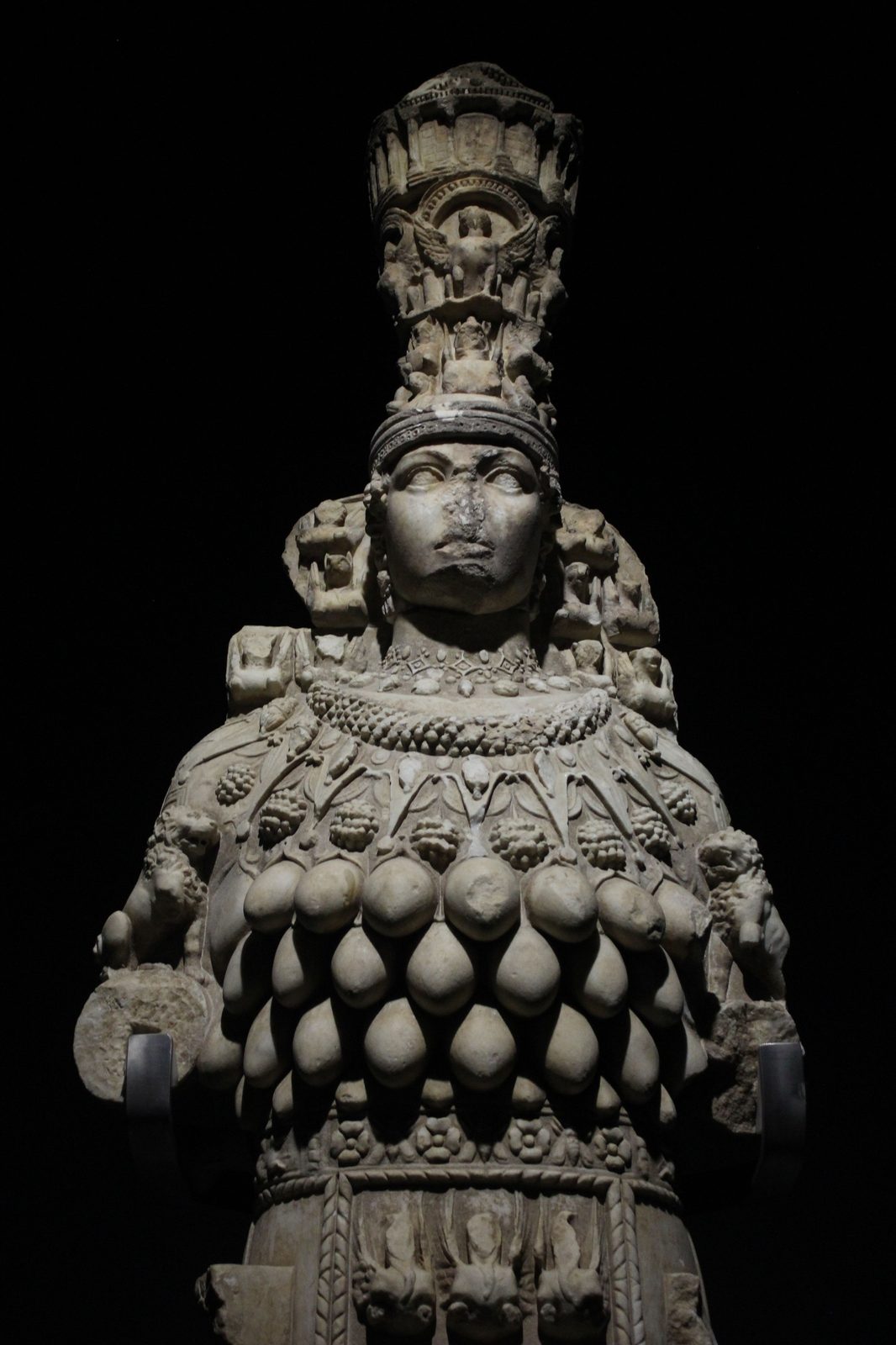
In two places. The first is the Ephesus Museum in Selçuk, where the Great Artemis and the Beautiful Artemis stand in their own hall. Both were found in the Prytaneion, the town hall of Ephesus, where the sacred flame of the city was kept. Look at her forearms: lions sit on them, and winged creatures and other animals crowd her crown and her skirt. The big cats made it onto the statue. The house cat did not.
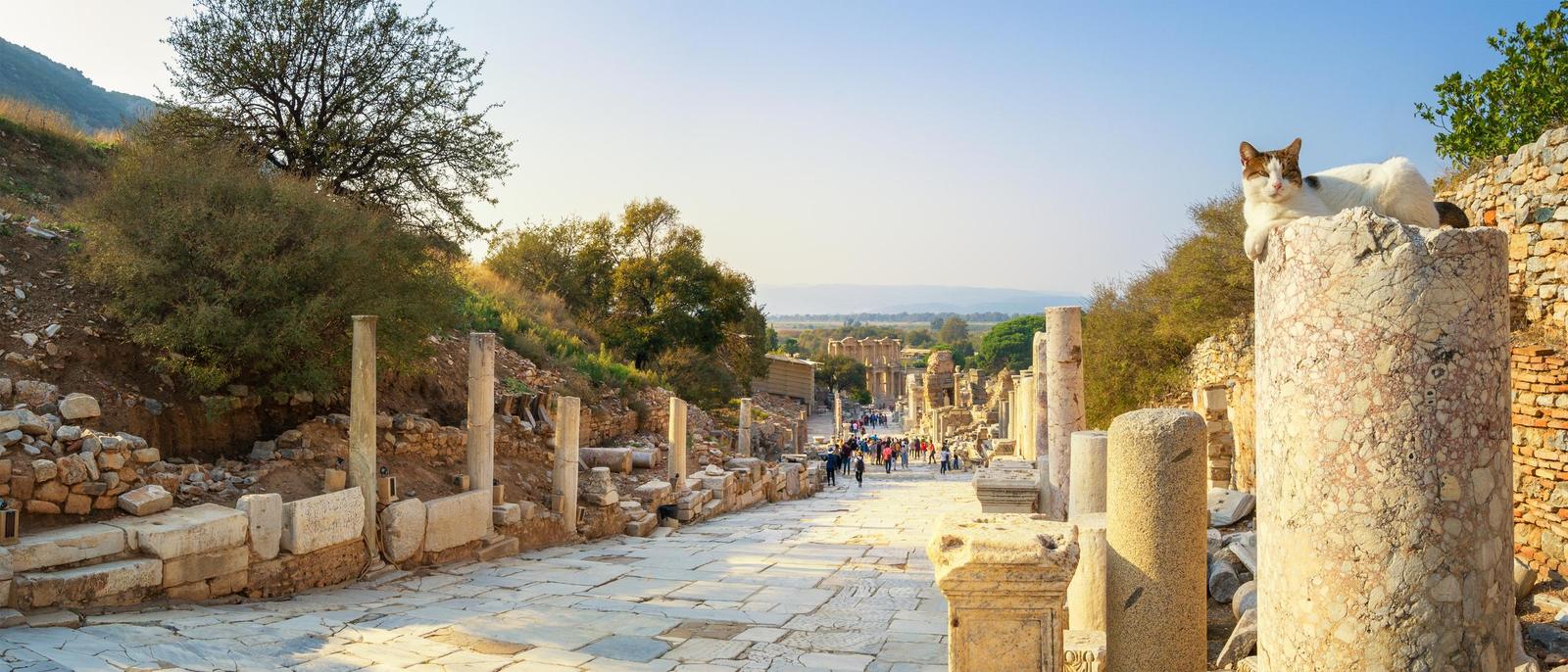
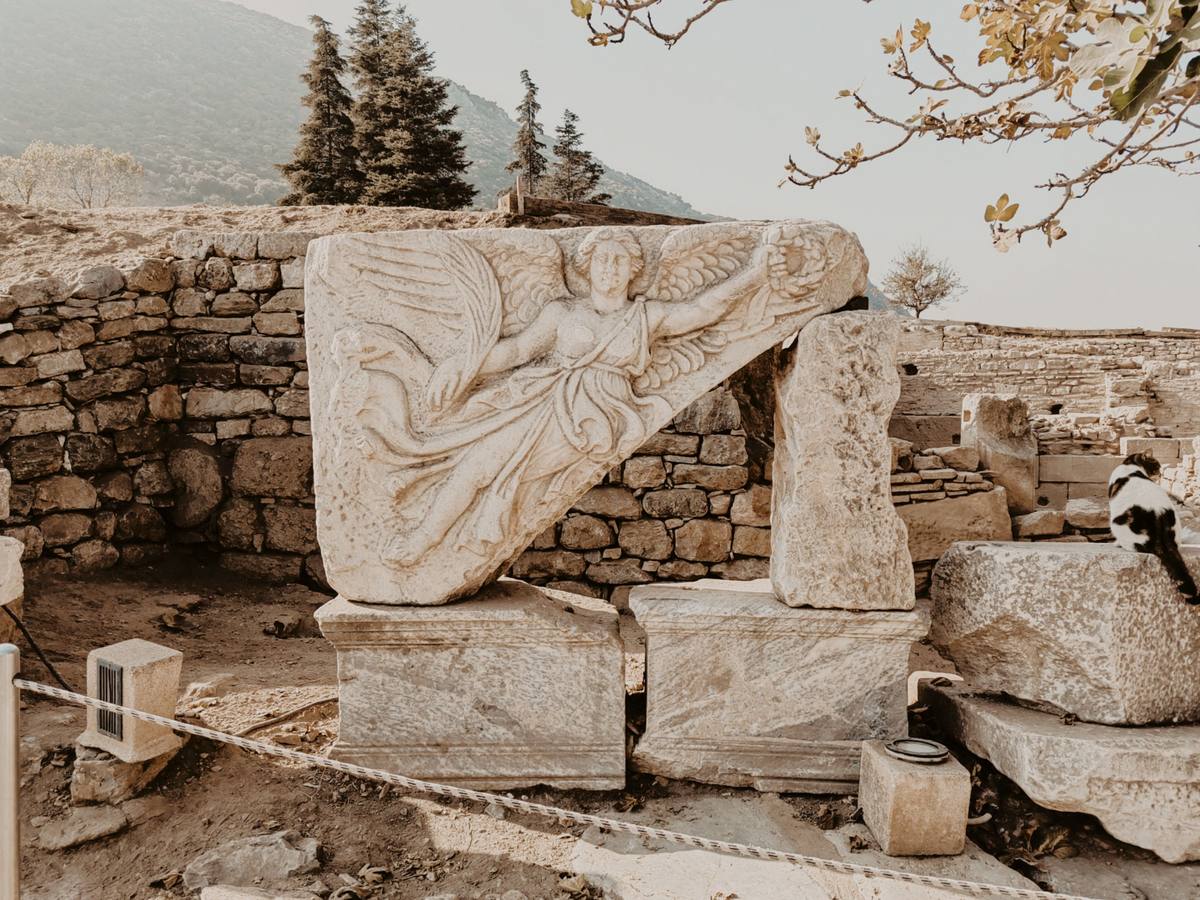
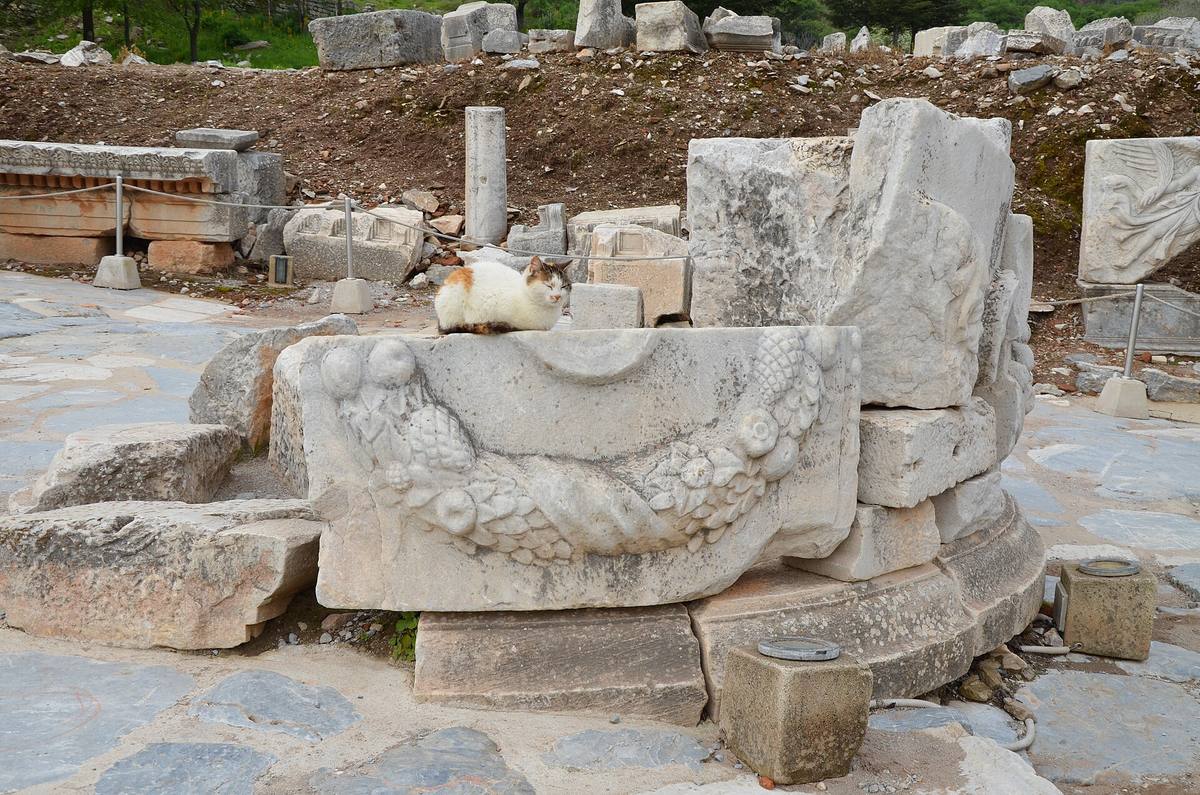
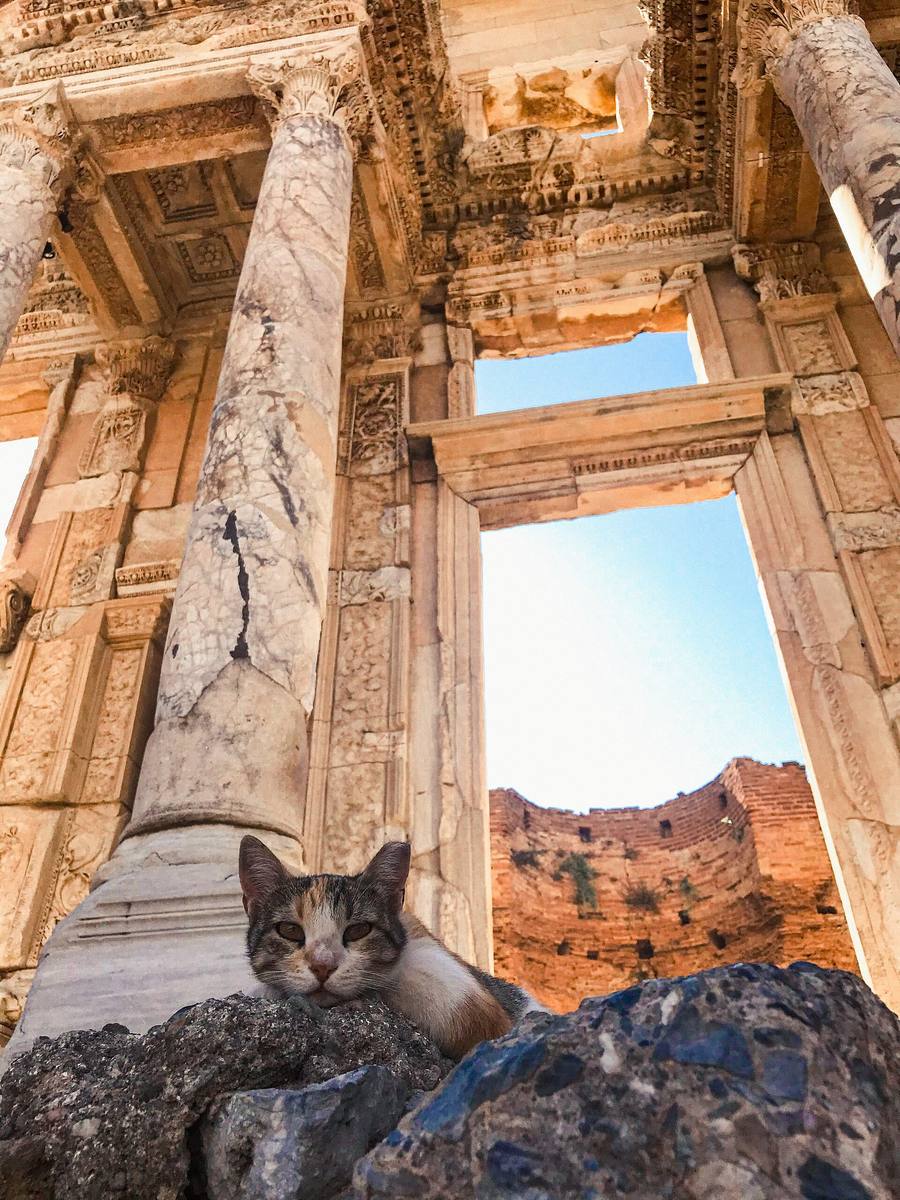
The second place is the ancient city itself. Most of my walks start at the Upper Gate, and the Prytaneion, where those statues were found, is one of the first stops. A little further down, the Nike relief at Domitian Square often has a cat close by, like the one at the top of this page, and the cats around the Library of Celsus have no shame about posing for photos. The temple site with its one rebuilt column is just outside Selçuk, and you can read more about it in my notes on the Temple of Artemis.
If you would like to stand at that column, see the statues in the museum and meet the residents on the way, hire a licensed guide who tells the Artemis story every week. I'll make the introductions, cats included.
Which Greek goddess names suit a cat?
Plenty of readers look for Greek goddess names for cats, so here is a short list from this story:
- Artemis: the closest thing Greece had to a cat goddess, and the lady of Ephesus
- Diana: her Roman name, and the one Ovid turned into a cat
- Bastet or Bast: the real cat goddess, from Egypt
- Bubastis: what Herodotus called her, after her city
- Ailouros: the ancient Greek word for cat, for a cat who is exactly that
- Leto: mother of Artemis, and the mouse in the Typhon story, for a cat with a sense of humor
- Nike: the winged Victory of Ephesus, for the cat who always wins the sunny spot
There is more about the goddess and the city's other eras on the History Pages of our front page.
Letters to the Editor
Who is the goddess of cats?
Bastet. She was the cat goddess of ancient Egypt, worshipped at Bubastis in the Nile Delta. Greek writers such as Herodotus identified her with Artemis. — The Editor 🐾
Is there a Greek god of cats?
No. No Greek god or goddess was in charge of cats. Artemis is the nearest link, through Bastet and the Typhon myth. — The Editor 🐾
What is Bastet's Greek name?
The Greeks equated her with Artemis. Herodotus calls her Bubastis after her city, and the Greek word for cat, ailouros, is sometimes used for her too. — The Editor 🐾
Who is the Roman goddess of cats?
There isn't one. Diana comes closest: in Ovid's Metamorphoses she hides from Typhon in the shape of a cat. — The Editor 🐾
Were cats sacred in Ephesus?
No evidence says so. Ephesus was the city of Artemis, but her cult was about wild animals, not house cats. The 150 to 200 cats living there today are simply well settled residents. — The Editor 🐾
Can I bring food for the cats when I visit?
Yes, if it is real cat food. Please no bread or snacks. In summer, topping up the water bowls around the site helps the cats most. — The Editor 🐾