Why Are There So Many Cats in Turkey? The Mews Explains
In brief
Why does Turkey have so many cats?
Because people in this corner of the world have lived with cats for more than 9,000 years and still look after them together. Neighbors put out food and water, shopkeepers leave a box by the door, and towns like my own Kuşadası run free neutering clinics. A Turkish street cat is a neighborhood cat, respected by custom, not worshipped.
They are not strays and they are not sacred. Your editor, who walks Ephesus every week, explains how Turkey ended up with a cat on every corner.
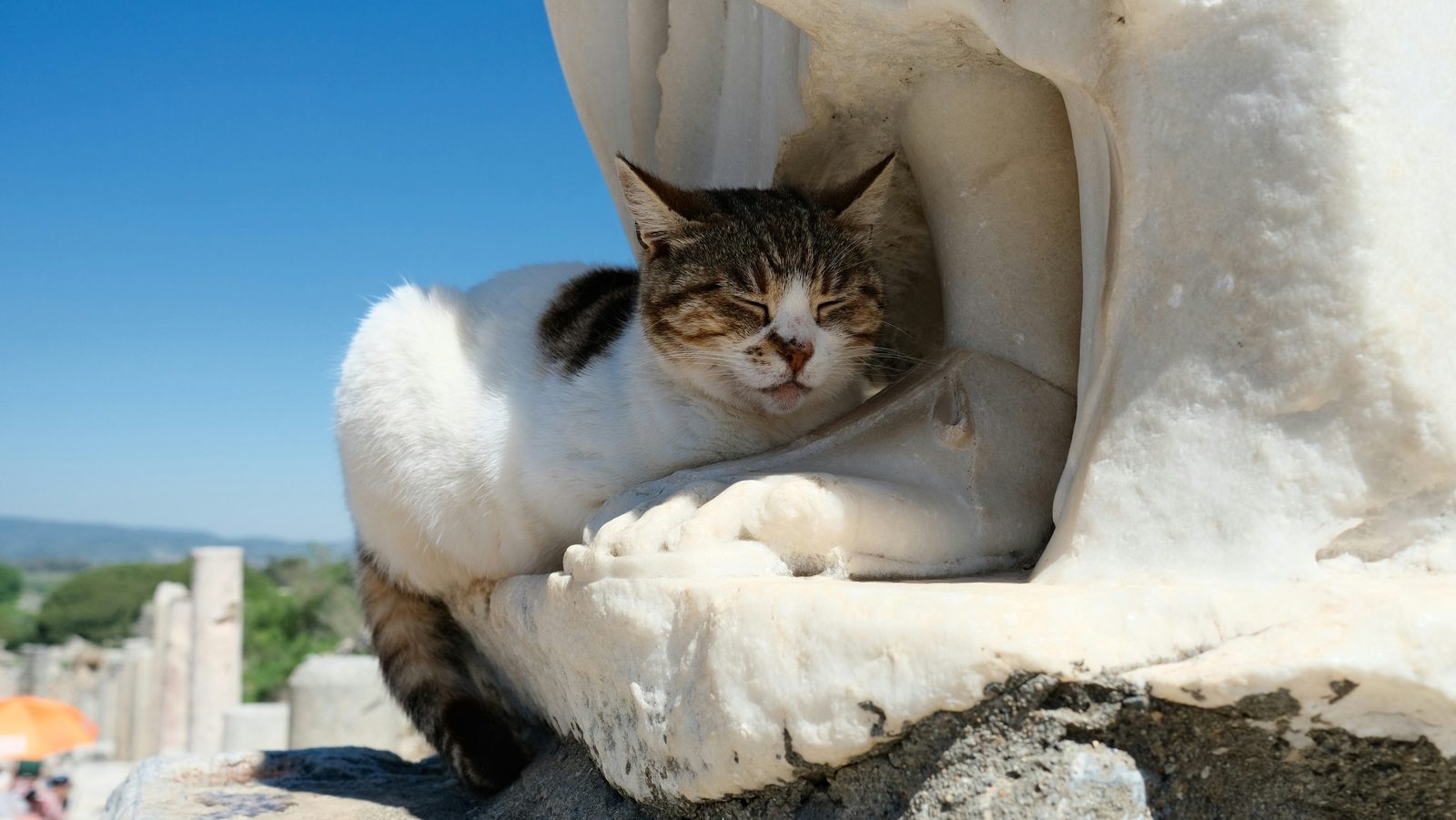
Why are there so many cats in Turkey? On my walks through Ephesus it's one of the first things guests ask me, usually while a cat is inspecting their shoes. Inside the ancient city alone there are around 150 to 200 cats, and most of them behave as if they hold the title deeds.
I gave the three-line answer in Letters to the Editor on the front page. This is the long one, from a guide who meets these cats every week and then goes home to our own family cat.
Why are there so many cats in Turkey?
There are so many cats in Turkey because people here have fed and sheltered them for centuries, and they still do. Cats arrived with the first grain stores and trading ships, Islamic tradition counts them as clean, Ottoman charities paid for their meals, and today whole neighborhoods share the job.
None of that makes them strays in the way most visitors mean the word. A Turkish street cat usually has a street, a doorstep and several people who consider it theirs. We call it a mahalle kedisi, a neighborhood cat.
How long have cats lived alongside people here?
About as long as anywhere on earth. When the first farmers of this region began storing grain, the grain drew mice and the mice drew wildcats. On Cyprus, just off Turkey's southern coast, archaeologists found a person buried beside a cat about 9,500 years ago, one of the oldest signs anywhere of people and cats sharing a life.
Then came the ships. A genetic study of ancient cat remains, published in 2017, found that cats spread around the Mediterranean along the same sea and trade routes as people. A cat on a cargo ship earned its passage by keeping the mice down, and port cities collected them.
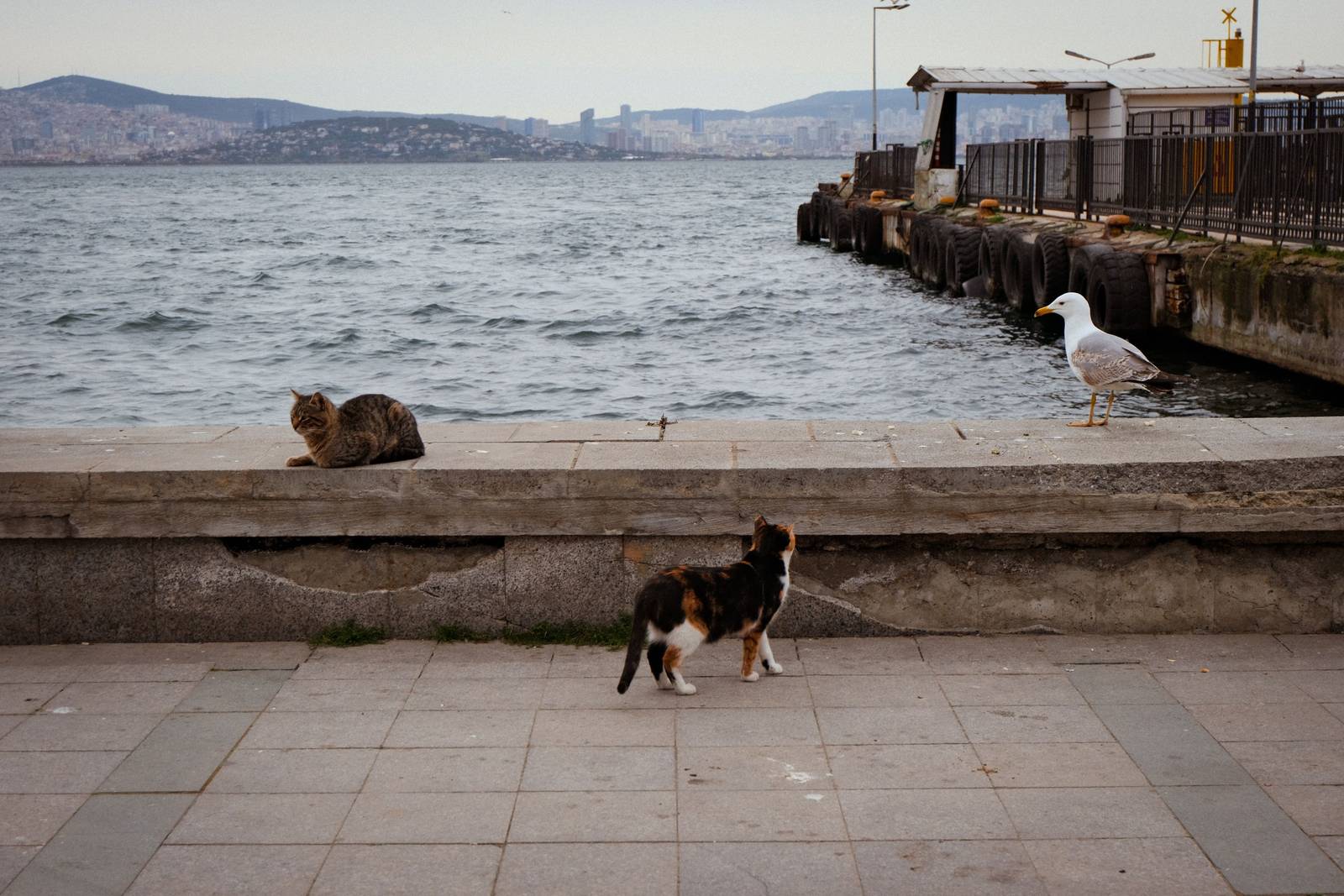
Ephesus was one of those ports, one of the great harbors of the eastern Mediterranean. Ships came and went loaded with grain and goods, which is exactly the kind of workplace a cat applies for. The harbor silted up long ago and the sea moved miles away. The cats stayed. You can follow the whole story, edition by edition, on our history pages.
Are cats sacred in Turkey?
No. Nobody here prays to a cat, and there are no cat temples. What cats have is respect, and much of it comes from Islamic tradition. A well-known hadith tells how Abu Qatadah, a companion of the Prophet Muhammad, tilted a water vessel so a cat could drink, because the Prophet had said cats are not impure and are among those who go around among you.
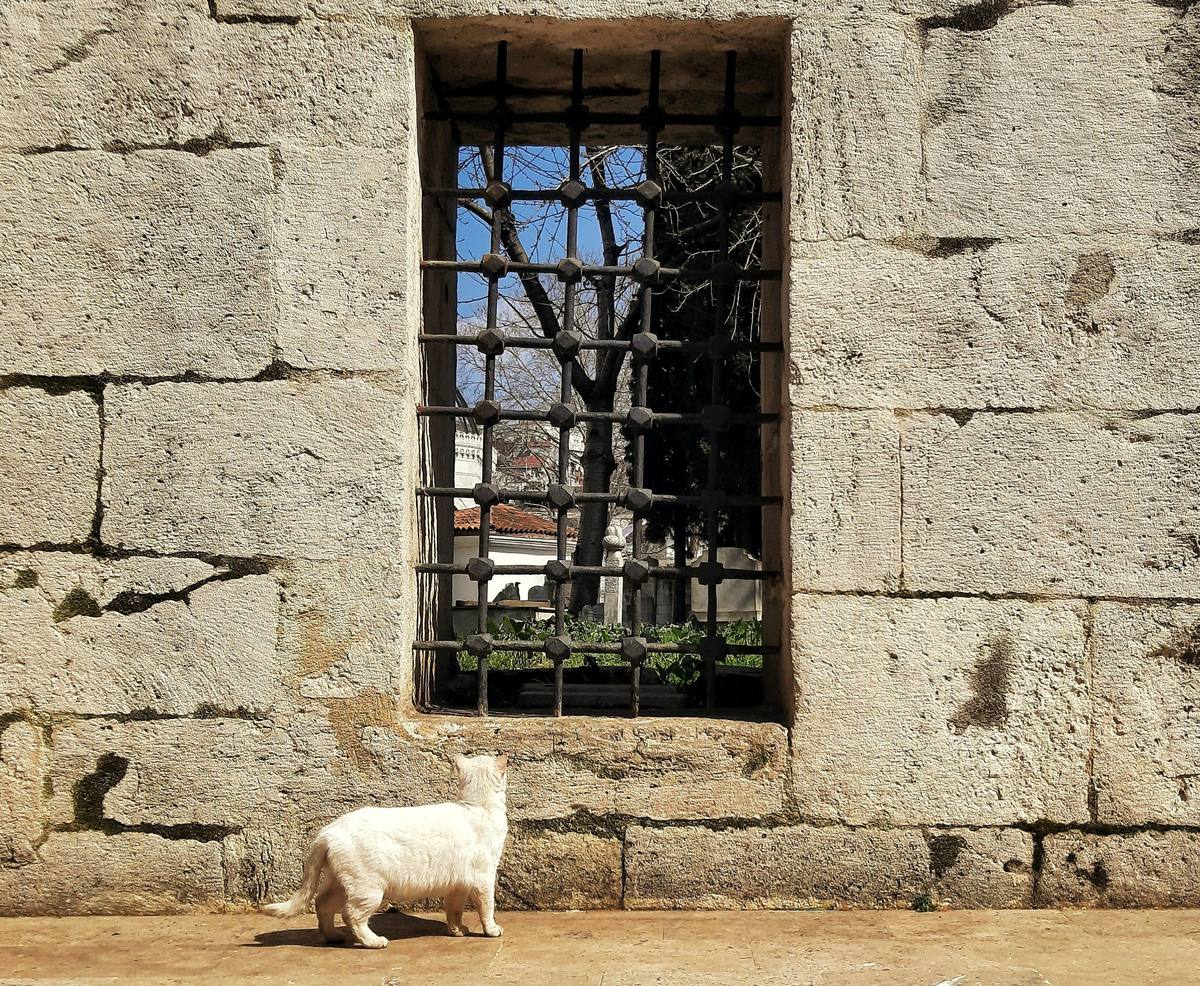
In practice that means a cat may drink from the same water, wander into a home and nap in a mosque courtyard without anyone shooing it away. Here, hurting a cat is widely seen as a sin. That's not worship. It's manners.
How did the Ottomans feed street cats?
With a whole profession. In Ottoman Istanbul, street sellers called mancacı carried skewers of liver, spleen and heart through the neighborhoods, calling out “kedi eti”, meat for the cats, not meat of them. People bought a skewer and fed the cats on the spot, or paid the seller to do the rounds for them.
Some went further and wrote the animals into their wills. The French traveler Jean de Thévenot noted in the 1600s that people left money so bakers or butchers would feed a set number of street animals each week. At the Şeyh Evhad Mosque in Istanbul's Koca Mustafa Paşa, a foundation set aside liver every day for the neighborhood's ownerless cats. The historian Metin Menekşe of Muğla Sıtkı Koçman University gathered these records in a 2022 study.
Why do Turkish people love cats so much?
Partly habit, partly heart. A cat that has lived on the same street for years becomes part of it, like the bakery or the corner shop. Neighbors leave out dry food and water bowls, shopkeepers let cats sleep in the window, and in winter you'll see little cat houses and padded boxes by doorways. The mild Aegean weather helps too: winters here are short, and a cat can find a sunny stone almost any month of the year.
Towns pitch in as well. In my hometown of Kuşadası, the municipality runs free neutering centers for street cats, one in the town center and another in Davutlar. Fewer kittens born on the street means a better life for the cats who are already there. That everyday care is the real answer to the question.
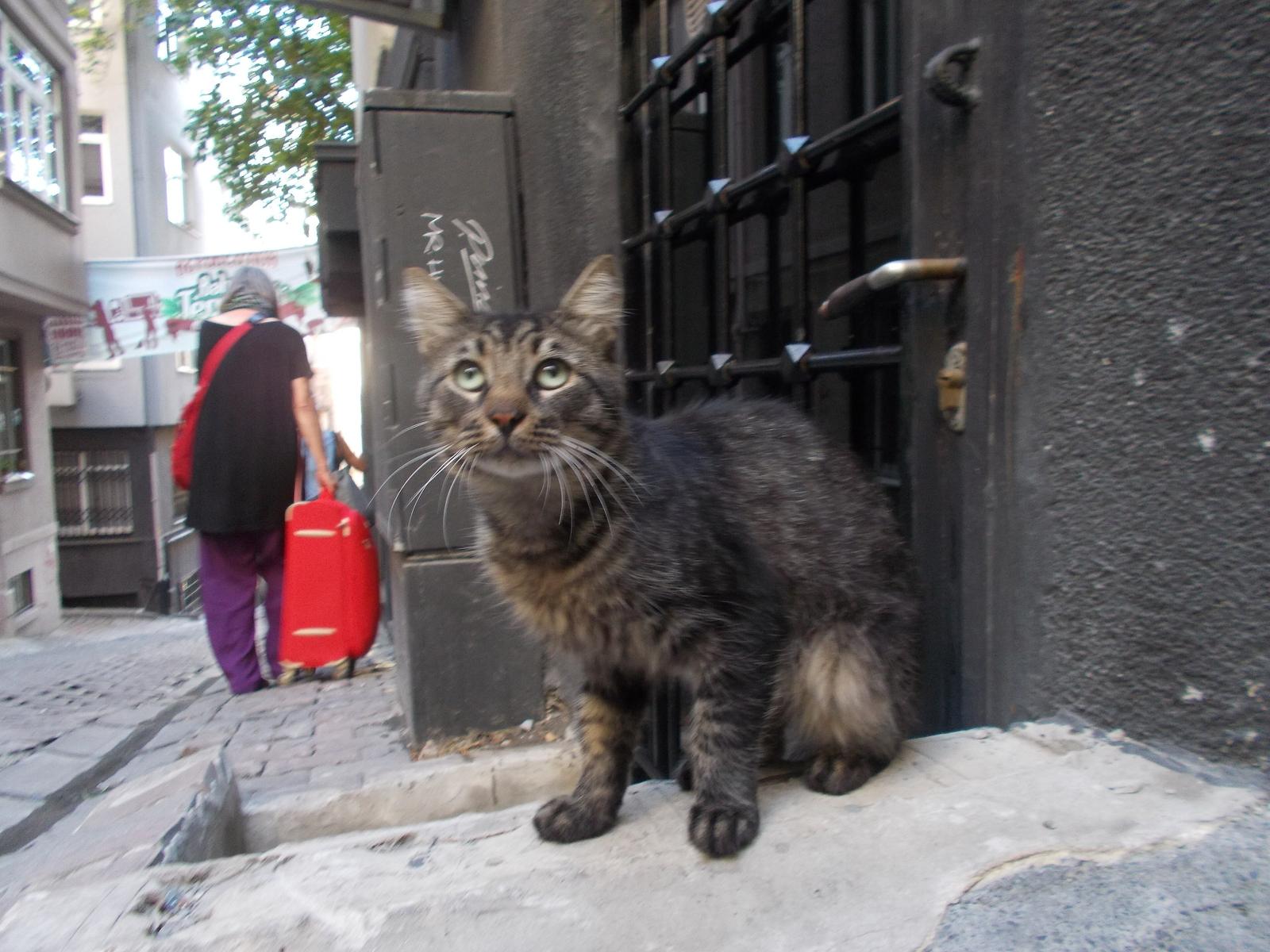
Istanbul is the same story on a bigger stage. It's an old port city of narrow lanes, courtyards and fish markets, and its cats got famous enough for their own film: the 2016 documentary Kedi followed seven of them.
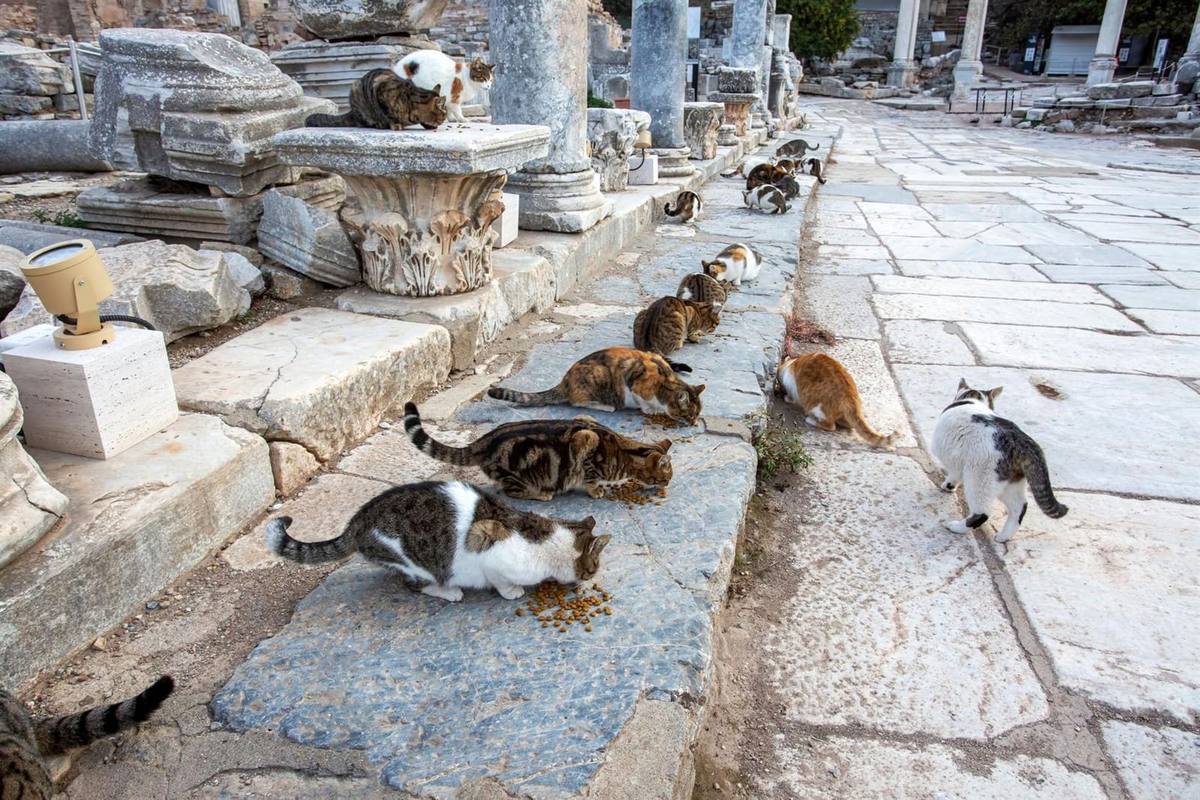
At Ephesus it works the same way, only with better architecture. Site staff, security guards, local vets and guides like me keep the 150 to 200 residents fed and watered, and early in the day you'll often find the breakfast line along the marble streets. I wrote more about the cats of Ephesus on my guiding site, and the public notices on our front page explain what to bring and what to leave at home.
If you'd like to meet the Ephesus committee in person, hire me as your licensed guide. I'll show you the Library of Celsus and the Great Theater, and I'll point out who's on duty along the way. The residents declined to comment for this article. They were asleep.
Letters to the Editor
How many cats are in Turkey?
Nobody knows. Turkey has no national cat census, and the guesses for Istanbul alone swing so widely that I won't print one. What I can tell you is that around 150 to 200 cats live inside ancient Ephesus. — The Editor 🐾
Why are there so many cats in Istanbul?
For the same reasons as the rest of Turkey, on a bigger scale. Istanbul is an old port city where people have fed street cats for centuries, from the Ottoman liver sellers to today's neighbors with a bag of dry food. — The Editor 🐾
Do street cats in Turkey belong to anyone?
Yes, to the whole street. A mahalle kedisi, or neighborhood cat, is fed by the neighbors, sheltered by the shopkeepers and claimed by everyone, even though nobody owns it on paper. — The Editor 🐾
Is it safe to pet street cats in Turkey?
Usually, yes, if the cat comes to you. Turkey is not free of rabies, so if any animal scratches or bites you, wash the wound with soap and clean water and see a doctor right away, as the CDC advises. — The Editor 🐾
Who feeds the cats at Ephesus?
Site staff, security guards, local vets and licensed guides like me, with help from visitors who bring proper cat food rather than human snacks. — The Editor 🐾